
The complexity of warehouse and material flow processes is constantly increasing. Orders are becoming more fragmented, delivery times shorter and product variety greater. At the same time, many sectors are facing a shortage of skilled workers, while demands for accuracy, speed and flexibility are growing.
The answer to these challenges is warehouse automation. It creates stable, scalable processes, increases throughput and reduces error rates; all around the clock, 365 days a year. Linde Material Handling’s automation solutions help you make your internal processes simpler, more efficient and safer for a fully automated warehouse – from goods receipt to shipping. Discover our warehouse automation solutions and automated warehouse systems tailored to your processes.
End-to-end automated warehouse
Our portfolio covers all areas of warehouse automation. From autonomous guided vehicles to conveyor systems and shuttle systems, all the way to fully automated warehouses: our warehouse automation solutions come from a single source and are perfectly coordinated. At the same time, they are scalable at any time and grow with your needs; composed around you!
Mobile systems: unbeatable flexibility and reliability
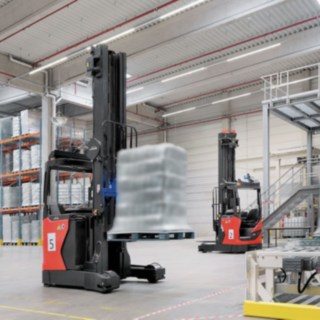
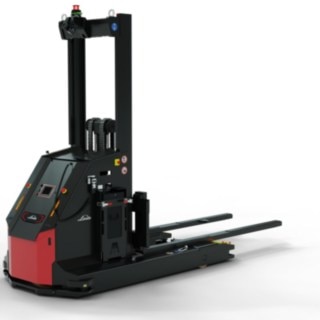
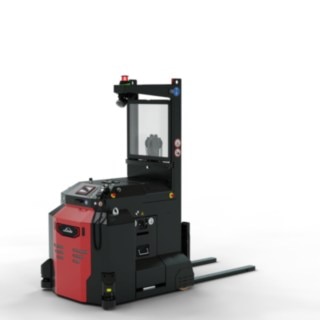
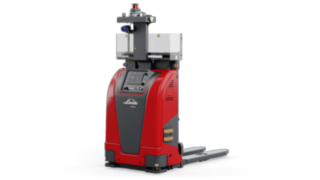
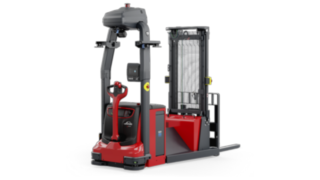
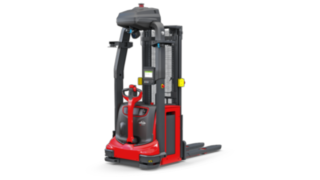
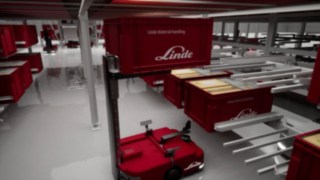
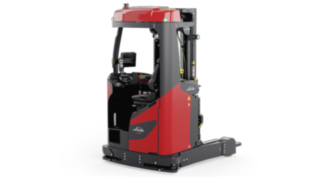
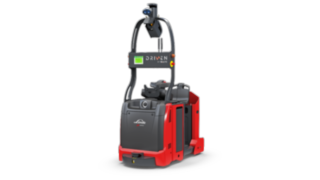
Our automated guided vehicles (AGVs) are the all-rounders of the automated warehouse. Designed for flexible handling of a wide variety of load carriers, our AGVs transport standardised pallets and pallet cages just as reliably as specialised containers or custom solutions tailored to specific customer needs.
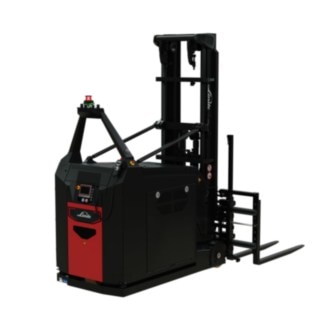
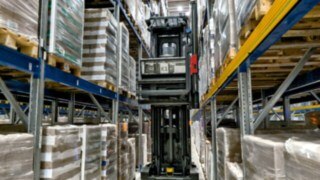
The range of tasks extends from simple transport to loading and unloading in high shelving. Thanks to autonomous navigation, reliable obstacle detection and the ability to operate alongside manual trucks, the systems integrate seamlessly into existing workflows. Each vehicle is based on the proven technology of Linde Material Handling’s standard series vehicles.
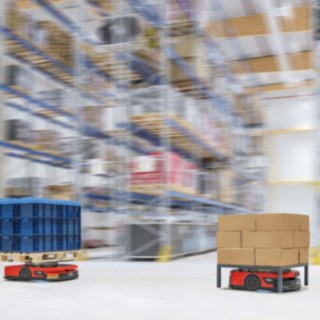
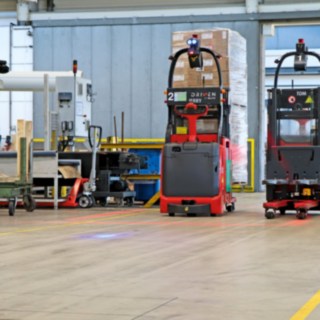
For long-distance transport, semi or fully automated tugger trains and autonomous mobile robots (AMRs) are available. Even for demanding environments such as cold storage facilities or for transporting bulky loads, our I-MATIC line offers the right solution.
Stationary systems: speed and storage density
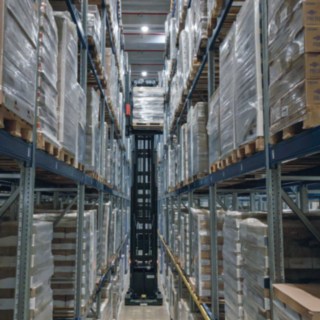
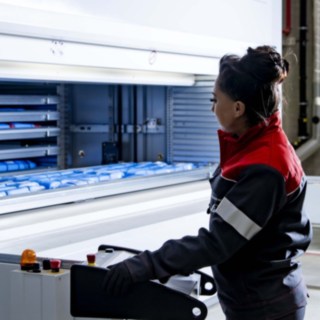
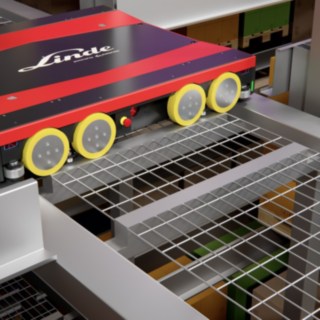
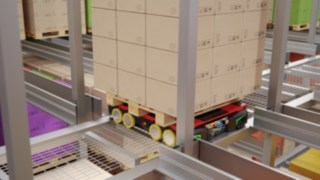
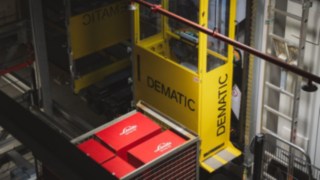
As key components of modern automated warehouse systems, stationary systems really shine when used with standardised load carriers such as pallets or crates. Automated shuttle and racking systems enable compact storage, fast storage and retrieval, and efficient, parallel operations. This allows you to make the best possible use of your warehouse space, minimise errors and benefit from consistently reliable, highly efficient processes.
Solutions from Linde MH:
- automated shuttle systems for pallets and containers
- Compact storage for efficient use of space
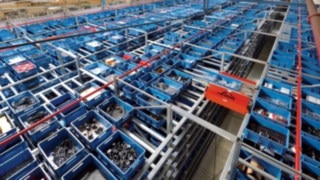
- Automated small-parts storage systems for quick access to small parts
- Automated storage and retrieval systems (ASRS) for high rack warehouses
Warehouse equipment: a solid foundation for your warehouse automation
Automated systems only reach their full potential when they are paired with the right warehouse equipment. That is why we offer our automation solutions, racking systems and conveyor technology all from a single source.
Racking systems
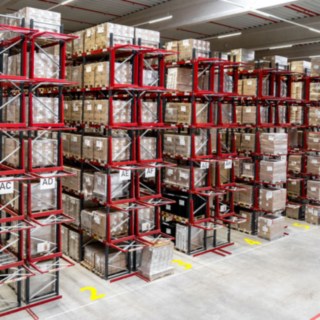
Our racking systems form the solid foundation of every automation solution. Whether it’s narrow-aisle high shelving for maximum space utilisation, drive-in and slide-in racking for high storage density, or flow and shuttle racking for quick access.
Conveyor systems
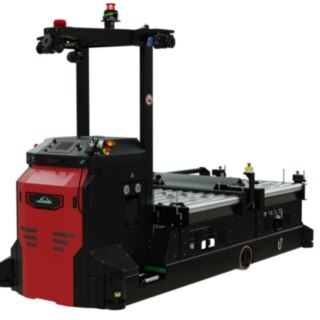
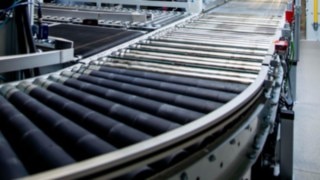
Conveyor technology is equally important. Permanently installed systems, such as mechanical or powered roller conveyors, ensure high throughput and a steady flow of goods. They are the ideal solution when transport routes are clearly defined and used continuously.
-Core-Single-Roller-Low-Perspective-Front-L_1x1w320.jpg)
-Core-Low-Perspective-Front-L_1x1w320.jpg)
Customised warehouse automation solutions
Not every intralogistics task can be handled with standard warehouse automation solutions. This is exactly where our I-MATIC line comes in with its custom-designed, automated vehicles for specific requirements. Whether for use in cold storage facilities at temperatures as low as -25 °C or for transporting particularly bulky goods, we have the right solution for you.
Special attachments:
- Side shifters and double forks for flexible handling
- Paper clamps for rolls and delicate materials
- Special forks for racks, pallet cages, or double pallets
- Roller, chain and belt conveyors for automatic transfers
Your first steps in warehouse automation
With Linde Material Handling, getting started with automation is easy and risk-free. We offer a flexible system that grows with your needs. Start small and then expand your automation step by step. This keeps your investment manageable and allows you to see the practical benefits right away.
Warehouse automation in existing facilities
Not every automated warehouse can be built from scratch. However, even within existing facilities, the use of software and scalable automated warehouse systems offers significant potential for optimisation.
Thanks to our decades of experience as a manufacturer of high-performance industrial trucks for customers in virtually every industry, we have extensive expertise in brownfield projects.
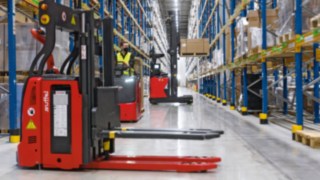
We seamlessly integrate our mobile and stationary solutions into existing processes. As a general contractor, we assume full responsibility for the project, coordinate all trades and guarantee on-time completion.
Scalable to any level of automation
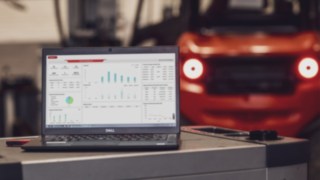
As your automation needs grow, our automated warehouse systems simply scale up with them. This is made possible by the entry-level control software Linde MATIC:move and the highly scalable control software Linde MATIC:move+ for our mobile systems. MATIC:move+ can be integrated into the Linde Warehouse Manager, but is also compatible with other common WMS systems via the standard VDA 5050 interface. This allows you to centrally control manual, mobile and stationary system components and seamlessly integrate your automation solutions into your existing WMS or ERP systems.
Automation for every process
From goods receipt through warehousing and order picking all the way to production, Linde MH’s warehouse automation solutions cover all internal material flows. Whether it’s a single step or a fully automated material flow, together we’ll find a solution for every need.
Goods received and goods shipped
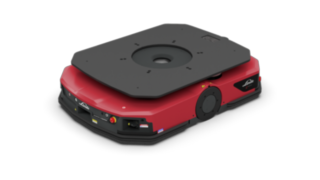
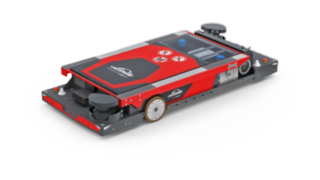
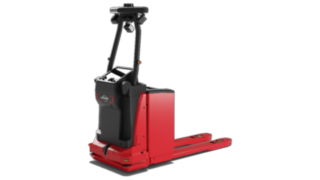
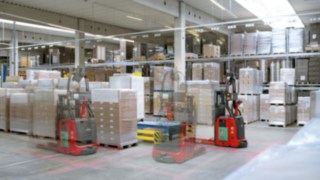
Our mobile systems handle all the necessary tasks to quickly place a wide variety of incoming shipments on the shelves or to prepare outgoing shipments for on-time delivery. They handle ground transport, temporary storage on shelves, preparation in staging areas, manoeuvring heavy loads and transfers between ground-level operations and conveyor systems.
Another option here is stationary conveyor technology. It is ideal for main lines with high throughput and standardised load carriers. Powered or gravity conveyor systems transport pallets and containers along fixed routes.

Warehouse processes
Whether for wide-aisle, high-rack, or block storage, our mobile solutions are ideal for transporting individual loads of various types. They efficiently move goods between storage areas, integrate with flow racks, conveyor systems and transfer stations, and prepare items for order picking.
When load carriers are standardised, as is the case with pallets and containers, stationary systems come into play. They enable high storage density, quick access and maximum throughput. If frequently used items and infrequently used items are handled simultaneously, a combination of both systems is recommended.
Picking
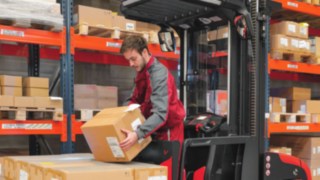
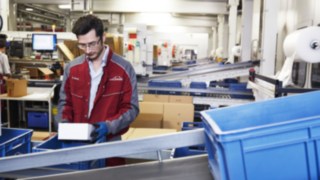
There are two strategies for order picking: person-to-goods and goods-to-person. Linde MH offers solutions for both methods that ensure maximum picking performance with minimal error rates and the lowest possible physical strain on employees.
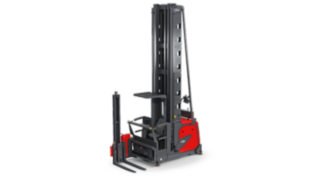
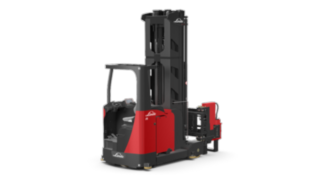
In this process, the person-to-goods system is still largely manual. Using ergonomic warehouse handling equipment, such as order pickers or Linde MH’s A and K very narrow aisle trucks, the employee drives to the storage locations and retrieves the required items.
With goods-to-person systems, there are two options: either our mobile solutions make the items available for picking, or stationary systems transport containers, pallets and shelving units directly to ergonomically designed picking stations.
Production supply
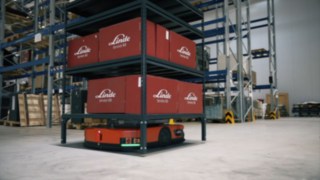
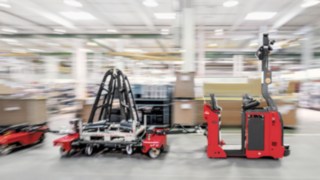
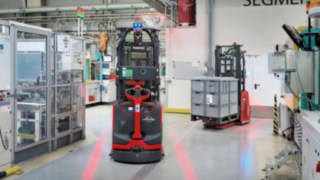
To meet the challenge of ensuring a stable, synchronised flow of materials between the warehouse, production and assembly areas without manual intervention, we offer specialised solutions. Our mobile systems handle floor-level and under-load transport, including automated tugger trains for larger volumes of materials. They supply machines and assembly stations and interact with the warehouse’s conveyor systems to do so.
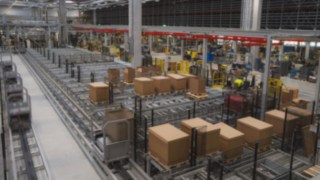
Our stationary systems, such as conveyor belts and underfloor conveyor systems, enable continuous transport along the production line. They move materials reliably and can even transport assembly platforms through the production line.
Intermediate and auxiliary processes
To ensure that the material flow does not stall, goods must be buffered, sequenced, or sorted between individual processes. Our mobile systems handle buffering and sequencing between the warehouse and production, or between production and shipping. They organise goods for order picking and ensure a synchronised material flow.
We also offer suitable solutions for cross-docking processes, in which incoming goods are sorted directly without being stored temporarily and then forwarded to locations such as distribution centres.
Our stationary conveyor systems are used for lightweight materials, while for palletised goods, automated guided vehicles work in conjunction with conveyor systems. This enables fast throughput, efficient transport and precise distribution of goods, even for large volumes.

FAQs – Frequently Asked Questions about warehouse automation
What is an automated warehouse?
An automated warehouse is a logistics system in which automated guided vehicles (AGVs ), autonomous mobile robots (AMRs ), shuttle systems and a warehouse management system (WMS ) work together intelligently. The goal is to manage processes such as storage, order picking and shipping with minimal manual intervention. This creates a seamless material flow from goods receipt to shipping. Automated warehouses increase throughput, reduce error rates and enable 24/7 operation. The investment is quickly recouped through lower operating costs and higher process efficiency. Implementation can be carried out step by step. Even individual tasks can be automated using automated guided vehicles or autonomous mobile robots, which can be ready for operation within just a few days. Linde Material Handling offers a comprehensive portfolio from a single source for this purpose. In addition to mobile solutions such as the MATIC series and C-MATIC robots, the range also includes stationary systems such as conveyor technology, compact shuttle systems, stacker cranes, and the appropriate warehouse infrastructure and equipment. This is complemented by intelligent software solutions and comprehensive material flow consulting .
How does an automated warehouse work?
Automated vehicles and stationary systems handle transport tasks within the warehouse. Central control software, such as the Linde Warehouse Manager coordinates all movements as a comprehensive warehouse management system (WMS). The software tracks inventory, controls warehouse processes and assigns transport orders to vehicles. An integrated warehouse control system (WCS) controls and coordinates the automated warehouse systems, while a forklift guidance system (FGS) coordinates manual transport tasks. The WMS also monitors storage locations and manages the handover between mobile and stationary components. Manual and automated vehicles can operate simultaneously in mixed traffic.
This is where Linde Material Handling offers key advantages. Since the control software centrally orchestrates both automated guided vehicles and manual forklift trucks, routes are intelligently synchronised and conflicts in the material flow are avoided. Advanced systems with high-precision sensors for automatic obstacle detection ensure maximum safety in shared work environments. Linde Material Handling’s automated vehicles are based on proven production models and integrate seamlessly into existing fleets. If necessary, the trusty vehicles can also be controlled manually at any time.
What are the benefits of an automated warehouse?
Automated warehouses increase throughput, reduce error rates and enable 24/7 operation without dependence on shift work. Targeted warehouse automation also provides additional benefits, such as higher storage density through compact shuttle systems, reduced physical strain on employees and scalable processes that grow with increasing demands. Linde Material Handling develops automated warehouse systems tailored to every need and supplies all components, perfectly coordinated, from a single source.
When is an automated warehouse a good investment?
An automated warehouse is particularly worthwhile for companies looking to increase their throughput, address labour shortages, or operate in multi-shift operations. When there are recurring transport tasks and a high level of process reliability is required, warehouse automation fully realises its strengths. The investment in an automated warehouse system is often recouped within a short period through lower operating costs and minimised error rates. Since Linde Material Handling offers a flexible entry point with just one to five vehicles, the move toward automation is also economically viable for small and medium-sized businesses. A detailed material flow consultation by the experts at Linde MH always includes transparent cost planning and implementation planning with a close focus on return on investment (ROI) and total cost of ownership (TCO). This gives you a clear, upfront view of exactly when the system will deliver returns.
Can an existing warehouse be automated?
Yes, warehouse automation in existing facilities is easily possible. This “brownfield approach” is one of Linde Material Handling’s core competencies. An automated warehouse system can be integrated step by step into your existing infrastructure. The key advantage is that warehouse automation can take place directly during ongoing operations, so your daily processes remain uninterrupted. You can start flexibly with individual automated guided vehicles (AGVs) and gradually expand and supplement your manual fleet. In this way, automation grows precisely in line with your spatial constraints and economic goals.
How do you build an automated warehouse?
Building an automated warehouse begins with a fundamental distinction: whether the automation will be implemented in an existing facility (brownfield) or in a new building (greenfield). This is followed by a detailed analysis of requirements such as product range and structure, throughput, storage capacity, existing buildings and current processes. During the conception phase, suitable mobile and stationary systems are selected, layouts and installations are planned, and simulations are conducted for complex projects. In parallel, a suitable WMS is selected and configured. This is followed by the installation of the technology, the integration of IT and control systems, as well as testing and commissioning. Linde Material Handling offers a scalable approach, ranging from a few mobile units for individual tasks to largely complete automation. A feasibility test with up to five AGVs can be carried out within a single day, and commissioning is possible within three days.
How much does an automated warehouse cost?
Costs depend on the level of automation, warehouse size and the systems used. However, there is no need to start with a fully comprehensive solution. With Linde Material Handling, you can begin with one to five vehicles, even without a direct WMS connection and with manageable initial investment costs. The system then grows step by step in line with your requirements. For a specific cost estimate, we recommend scheduling a personal consultation.
Warehouse automation in action
Learn more about our intralogistics and warehouse automation solutions
Intralogistics and automation solutions composed around you
At Linde Material Handling, we take a holistic approach to intralogistics and automation. From analysis and consulting to design and implementation, all the way through to service and further development, we provide everything from a single source. We combine mobile and stationary systems, intelligent software, proven industrial components and carefully selected partner products to create a solution tailored precisely to your needs. This is backed by over 70 years of experience with high-performance vehicle technology and a deep understanding of intralogistics processes. Efficient. Reliable. Typically Linde Material Handling.